UGF- 6, Antriksh Bhawan, KG Marg, New Delhi-110001

In Gurugram's commercial real estate market, return on investment is shaped by more than just location. Delivery timelines -and the construction method behind them -are increasingly determining when developers can begin leasing and when investors start earning. Steel construction in commercial buildings has emerged as a direct response to this shift, offering measurable advantages in speed, structural performance, and long-term cost efficiency.
For developers operating in Gurugram's high-demand commercial corridors, steel framing reduces project delays and shortens leasing cycles at a time when Grade A office and retail space remains in short supply across NCR.
Gurugram is the largest commercial hub in the National Capital Region, with office absorption rates remaining strong. According to industry data, the market recorded absorption of nearly 8 million square feet across recent quarters -supported by infrastructure developments including the Dwarka Expressway and the expanding metro corridor.
With the RBI repo rate at 6.5% in early 2025 and RERA frameworks providing regulatory stability, investors in Grade A commercial assets are increasingly prioritising projects that can be delivered, occupied, and leased efficiently. Steel buildings meet this demand directly by combining structural strength with faster construction timelines.
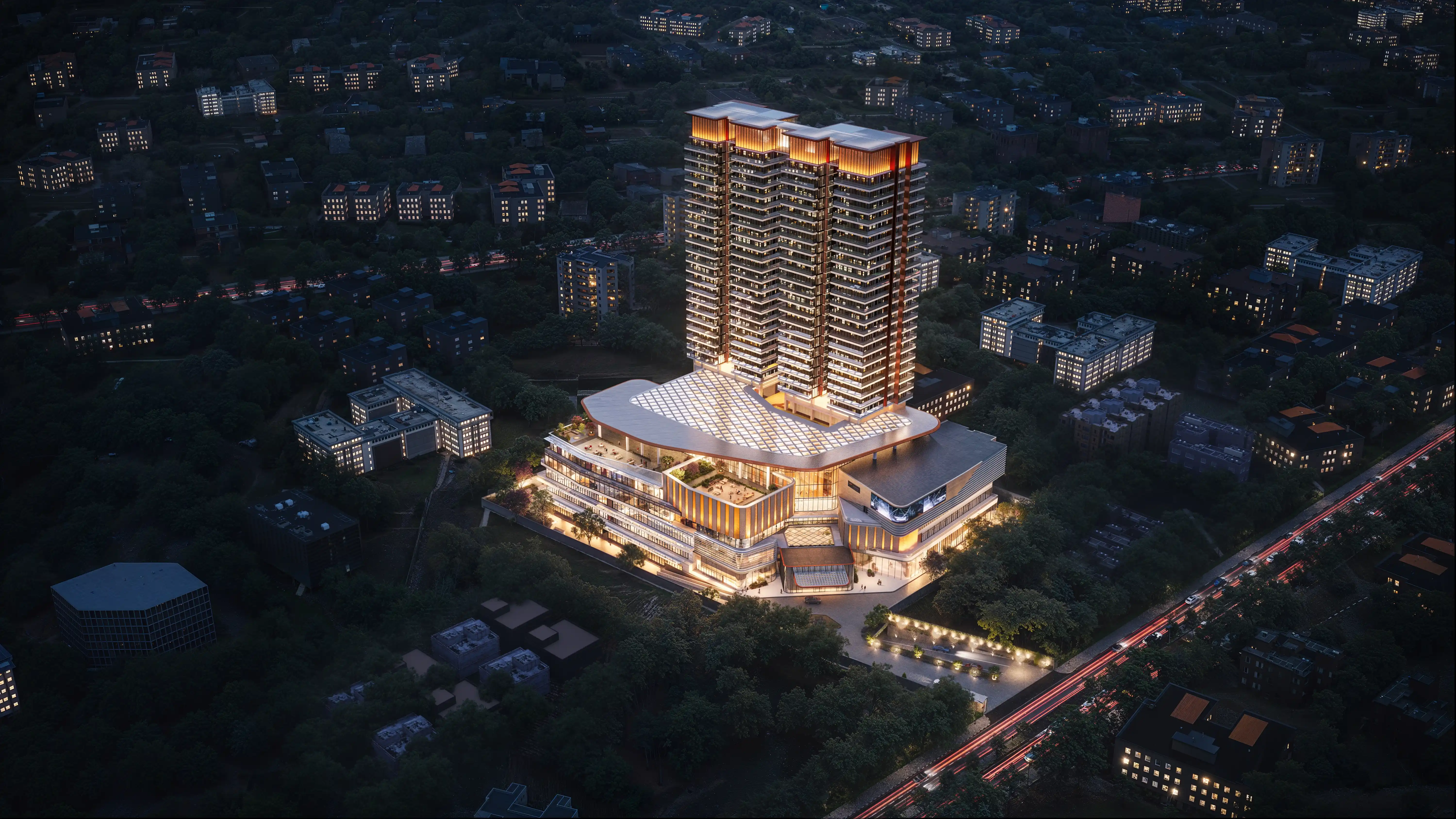
SPJ Group's commercial developments -including its ongoing project in Sector 14, Gurugram -reflect this approach: structurally robust, professionally executed, and built for long-term asset performance.
Modern commercial occupiers -especially in the office and large-format retail segments -require flexible, column-free layouts that conventional construction methods cannot always accommodate efficiently. Steel framing enables wider spans and open floor plates, making it well-suited to the design requirements of contemporary workspaces and mixed-use developments.
From a timeline standpoint, steel construction can reduce build cycles by 30-50% compared to conventional RCC methods. This compression in delivery directly benefits investors by enabling earlier leasing and faster income generation from commercial assets.
Gurugram falls within seismic zone IV, which requires materials capable of absorbing dynamic loads. Steel's ductility -its ability to deform without fracturing under stress -makes it a structurally appropriate choice for high-rise commercial construction in this region.
Sustainability considerations are also now influencing occupancy decisions. Steel is fully recyclable, supports reduced material waste on site, and contributes toward green building certifications including IGBC and GRIHA -both of which are increasingly relevant to institutional and multinational tenants evaluating commercial space in NCR.
Gurugram's Grade A commercial real estate offers rental yields in the range of 7-10%, with well-located assets along established corridors demonstrating consistent performance through market cycles.
Steel construction contributes directly to investment returns in three ways:
Faster time-to-market: Shorter construction timelines mean earlier leasing commencement, which improves effective yield compared to longer-gestation conventional builds.
Structural cost advantage: Steel-based frameworks can reduce structural construction costs by approximately 15% compared to equivalent RCC structures, improving project economics at the development stage.
Dual return potential: Infrastructure upgrades -including metro expansion and expressway connectivity -continue to support both rental income growth and capital appreciation in Gurugram's established commercial micro-markets. Grade A commercial assets in corridors with limited supply and high occupancy rates are positioned to benefit from both income and value growth over a 5-7 year holding period.
Steel construction carries specific risk considerations that investors should evaluate before committing capital:
Input cost volatility: Steel prices increased by approximately 8-9% in 2025, and raw material price fluctuations can affect project economics, particularly for fixed-price development agreements.
Execution quality: The performance of steel-framed buildings depends significantly on fabrication standards and site quality control. Poorly executed connections or inadequate protective treatments can compromise structural performance over time.
Micro-market oversupply: Peripheral commercial locations may experience temporary supply imbalances. Asset selection -both developer track record and location fundamentals -remains a critical part of due diligence for commercial real estate investment in NCR.
Steel construction is best suited to patient, long-term capital rather than short-cycle speculative investment.
Well-suited for:
HNIs and institutional investors seeking stable, recurring rental income from Grade A commercial real estate in Gurugram.
Businesses requiring flexible, large-format commercial layouts for office or retail use.
Long-term investors with a 5-7 year horizon and a capital allocation of ₹5-20 crores targeting NCR commercial assets.
Consider carefully if:
Your investment horizon is under 2-3 years and your primary objective is short-term capital gain.
You are evaluating projects where construction material specifications and structural engineering documentation have not been disclosed by the developer.
When evaluating developers, prioritise those with a demonstrable track record in commercial construction, disclosed material standards, and RERA-compliant project documentation.
Steel construction in commercial buildings reduces project timelines by 30-50%, enabling faster leasing and earlier return on investment.
Gurugram's Grade A commercial market offers rental yields of 7-10%, further optimised by reduced construction timeframes and earlier income generation.
Structural cost savings of 10-15% over conventional methods improve development economics without compromising structural integrity or design flexibility.
Risks include raw material price movement and execution quality -both manageable through careful developer selection and material specification review.
Steel construction in commercial buildings is best suited to long-term investors targeting rental income and capital appreciation over a 5-7 year horizon.
Q. Is a steel building suitable for Gurgaon's weather and climate conditions?
Yes. Steel structures perform well in Gurgaon's climate -including summer heat, dust, and monsoon rainfall -when built with appropriate protective coatings and corrosion treatments. Properly specified steel buildings maintain structural integrity across seasonal extremes with minimal maintenance intervention.
Q. What factors affect the cost of steel buildings in NCR?
The total cost depends on prevailing steel prices, structural design complexity, site and foundation conditions, labour and fabrication standards, and customisation requirements such as acoustic insulation, mezzanine floors, or façade specifications.
Q. Do steel buildings require more maintenance than conventional structures?
When constructed with high-quality protective coatings or galvanisation, steel commercial buildings require less ongoing maintenance than many conventional structures. The key is specification quality at the construction stage -correctly treated steel can remain structurally sound for several decades with standard periodic inspection.
Q. What regulatory approvals are required for steel building construction in Gurgaon?
Commercial steel construction in Gurgaon requires approvals from local municipal authorities (GMDA/MCG), compliance with the Haryana Building Code, National Building Code (NBC) 2023 standards, fire safety clearances, and RERA registration for applicable projects. Investors should verify that all approvals are in place prior to committing capital.
Q. Are steel buildings environmentally sustainable?
Yes. Steel is 100% recyclable and many commercial steel buildings incorporate recycled-content material. Steel construction also generates significantly less site waste compared to conventional methods and is compatible with green building certifications including IGBC and GRIHA -both increasingly relevant to institutional tenants operating under sustainability mandates.
Q. What is the expected lifespan of a commercial steel building?
A well-designed and properly maintained steel commercial building can remain structurally sound for 40-70 years or more, depending on the quality of initial specification, environmental exposure, and ongoing maintenance standards.
Disclaimer : The information available in this advertisement is subject to change without any notice. While every effort has been made to provide the details, particulars, contents and other graphics appearances in this advertisement as updated, correct, complete and accurate, nevertheless, inadvertent errors may occur in the information. Further, our website(s) and other advertising and publicity material include artist's impressions indicating the anticipated impressions of the appearance of completed development and do not constitute an offer, an invitation to offer and/or commitment of any nature between us and the recipient.
© Copyright 2026 SPJ, All Rights Reserved


