UGF- 6, Antriksh Bhawan, KG Marg, New Delhi-110001

An expanding consumer base in Delhi NCR, with a growing population and improving infrastructure, strengthens its commercial real estate market. Delhi NCR, including Gurugram, Ghaziabad, and Faridabad, has established shopping destinations along with emerging commercial corridors. However, before choosing the right property for investment, it is important to understand its location, customer catchment, tenant mix and potential for sustained footfall. It is crucial to identify developments that combine accessibility, convenience and experience while making retail property investment in Delhi NCR.
SPJ Vedatam, in Sector 14 Gurugram, presents a quintessential example of how organized retail, dining and entertainment can come together within one commercial destination. So, retail property investors must compare malls, high streets and neighbourhood retail before deciding to make a retail property investment in Delhi NCR.
Location plays a significant role in determining the easy accessibility for the visitors to return to a particular retail destination. Established commercial areas in Delhi, Gurugram and Noida benefit from residential catchments, office clusters, metro connectivity and major road networks. Expressways, metro networks, airports and expanding employment hubs are important drivers of the region's real estate growth and expanding infrastructure across Delhi NCR.
SPJ Vedatam is located in Sector 14 on Old Delhi-Gurugram Road, and the project occupies a prominent position in Old Gurugram. Its location connects it to established residential neighbourhoods, commercial hubs and important road networks, including NH-48. Established urban and dense residential catchments offer businesses easy access to an existing customer base rather than completely depending on or relying on future developments.
Malls attract customers through an integrated shopping and leisure experience. Fashion outlets, food courts, restaurants, entertainment zones and multiplexes encourage visitors to spend more time at one destination. Their appeal is particularly strong among families and consumers seeking multiple experiences under one roof. According to Devika Group, professionally managed commercial complexes can also benefit from anchor tenants, structured leasing arrangements and a diversified retail mix.
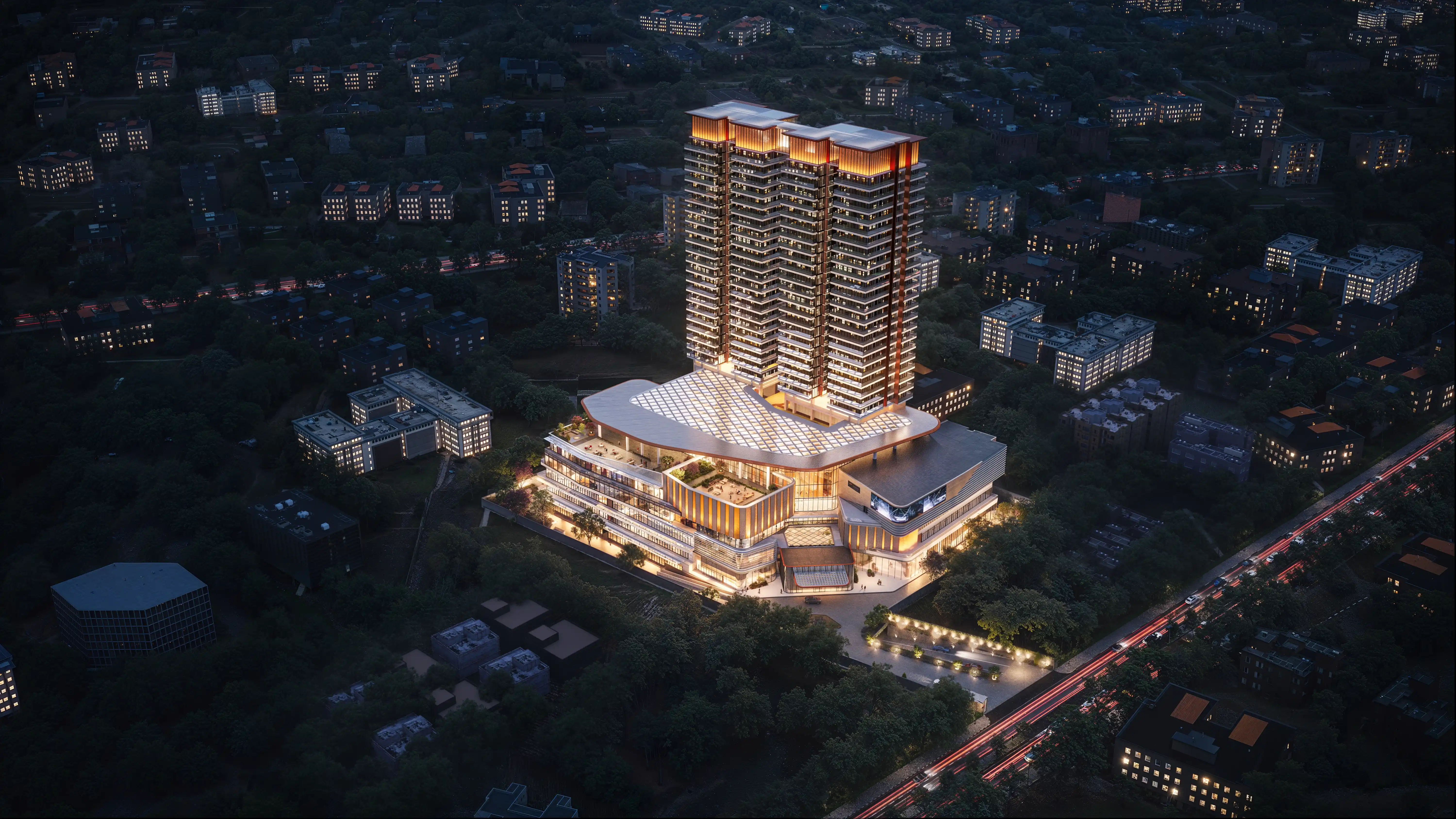
How SPJ Vedatam strengthens this advantage: Spread across approximately 4.15 acres, SPJ Vedatam brings together retail, dining and entertainment in an organized commercial development. Its retail spaces span the Lower Ground, Upper Ground and First Floors, while dedicated dining and entertainment zones extend the overall visitor experience. The project also features a multiplex, with PVR identified as an associated cinema brand on its official project website. This combination can encourage customers to visit for shopping, dining and leisure rather than a single transaction.
High-street retail property attracts investors through street-level visibility, accessibility and the flexibility that accommodates different business categories. Unlike conventional malls, high-street developments can benefit from customers who visit more spontaneously and frequently while travelling between residential and workplace destinations. Retailers that are mainly oriented by neighbourhood benefit from such frequent visits, a local customer base and convenient access.
SPJ Vedatam combines an organized retail environment with the accessibility of an established Gurugram location. Its premium retail outlets are planned across multiple levels, supported by escalators, lifts and parking facilities for about 1,100 vehicles. This gives retailers an organized commercial setting, and it also gives visitors access to shopping, dining and entertainment within a single destination.
Neighbourhood retail aims at serving the everyday requirements of nearby residents and professionals. Convenience stores, pharmacies, salons, cafes and essential services benefit from proximity and repeat consumption. Consumers increasingly favour accessible retail destinations over planning lengthy shopping trips. Consequently, retail real estate investment in NCR opportunities with strong residential catchments can attract investors looking for demand beyond occasional destination shopping.
The established residential surroundings of Sector 14 create an opportunity to serve customers across everyday shopping, food and leisure categories. SPJ Vedatam brings retail outlets with restaurants, cafes and entertainment facilities, favouring a wider tenant mix. It’s positioned as an organized retail hub that can help businesses attract planned shopping visits and spontaneous customer requirements.
The long-term performance of a retail property depends on more than its physical location and tenant mix; the positioning of a brand, along with its smooth accessibility, can attract visitors for more frequent visits, which also influences commercial demand. A well-balanced development combines lifestyle, food and beverage, entertainment and essential services. For investors evaluating mall retail investment, the presence of established brands can result in higher attention and attraction. Similarly, high-street retail property performs best when its offerings reflect its surrounding catchment.
SPJ Vedatam features KANAKA retail spaces, RAASA dining destinations and a TARANG entertainment zone, and this is how it brings premium retail, fine dining and multiplex entertainment as key components and also promotes amenities such as ample parking, 24/7 security, green spaces and vertical circulation facilities. These elements provide a foundation for a multi-commercial ecosystem.
It is extremely significant for investors to examine the credentials of the developers along with their project approvals, status of the property’s construction, timelines for possession, maintenance arrangements or extra charges. RERA registration is an important starting point, while title verification, agreement conditions and tenant-related commitments should be analyzed on an individual basis. Retail property investment in Delhi NCR should be evaluated on realistic rental assumptions rather than returns alone.
SPJ Vedatam is registered under HARERA number HARERA/GGM/927/659/2025/30, dated 25 March 2025. Its project offers retail, dining and entertainment across a single commercial development. So, investors should verify the latest unit specifications, pricing, possession commitments, leasing arrangements and any return-related assurances independently before making any decision.
Malls, high streets and neighbourhood retail each offer different investment propositions. Malls focus on destination experiences, high streets benefit from visibility and accessibility, and neighbourhood retail focuses on convenience and repeat demand. However, the right choice ultimately depends on location, customer catchment, tenant mix and the developer's execution.
For investors who are exploring retail property investment in Delhi NCR, SPJ Vedatam brings these considerations together through its Sector 14 location, approximately 4.15-acre development and integrated retail, dining and entertainment offering at one destination. It adds to organized retail that can respond to the evolving commercial landscape of Gurugram.
Q1. Is retail property investment in Delhi NCR a good option?
Delhi NCR can offer multiple opportunities due to its growing consumer base, expanding infrastructure, residential catchments and established commercial hubs. So, retail property in Delhi NCR can be considered a good option.
Q2. What are the different types of retail properties available for investment in Delhi NCR?
The major retail properties available for investment in Delhi NCR include shopping malls, high-street retail developments and neighbourhood retail spaces required for different consumers, ranging from destination shopping and entertainment to everyday convenience and repeat purchases.
Q3. What is the difference between mall retail investment and high-street retail property investment?
Mall retail investment focuses on organized shopping, dining and entertainment experiences at a single destination, whereas high-street retail property investment benefits from street-level visibility, convenient accessibility and established local customer catchments.
Q4. Which factors should investors consider before making a retail real estate investment in NCR?
Investors should consider location, connectivity, surrounding residential and commercial catchments, expected footfall, tenant mix, developer credentials, RERA registration, construction status and maintenance costs before making a retail real estate investment in NCR.
Q5. Why is location important for retail property investment in Delhi NCR?
Location determines accessibility and the potential customer base of a retail development. Properties situated near residential neighbourhoods, office clusters, metro stations and major road networks can benefit from established consumer catchments and convenient connectivity.
Disclaimer : The information available in this advertisement is subject to change without any notice. While every effort has been made to provide the details, particulars, contents and other graphics appearances in this advertisement as updated, correct, complete and accurate, nevertheless, inadvertent errors may occur in the information. Further, our website(s) and other advertising and publicity material include artist's impressions indicating the anticipated impressions of the appearance of completed development and do not constitute an offer, an invitation to offer and/or commitment of any nature between us and the recipient.
© Copyright 2026 SPJ, All Rights Reserved


