UGF- 6, Antriksh Bhawan, KG Marg, New Delhi-110001

Gurgaon's master plan outlines 16,021 hectares for residential use in the Gurgaon-Manesar region by 2031 (projected population of ~ 4.25 million). The growth of residential master planning is one of the major factors influencing the growth of premium residential real estate in NCR today. Gurgaon is expanding through planned residential projects and township planning, where infrastructure, open space, and community amenities are planned before construction.
Residential master planning determines whether the residential location develops into a successful neighbourhood or becomes congested and suffers from poor connectivity for both investors and homebuyers.
Residential master planning is the process used to develop an entire residential ecosystem from the planning stage to constructing homes. It is the framework for how homes will be built, how infrastructure will connect, and how the community will develop over time.
Residential sectors are planned as neighbourhoods, each sector containing community facilities (such as schools, healthcare services, and retail outlets) and an average density of approximately 250 persons per hectare, allowing urban growth without excessive overcrowding.
For premium housing, developers are increasingly reliant on the township planning. This has led to three significant trends within the development of premium housing:
Low density of residential towers and open spaces allows for air circulation, privacy, and green space for residents. Premium housing projects maintain low density by providing large areas of landscaped green and recreation.
Real estate markets develop within infrastructure corridors (e.g. expressways, metro stations and employment centres). Gurgaon’s planned residential projects include major road networks and connectivity to residential sectors in Delhi and other areas of the NCR. Developers who build within infrastructure corridors typically see much higher residential demand for their projects.
Most new residential developments are planned as integrated communities rather than stand-alone buildings.
Elements in planned communities are:
This type of community environment reduces travel time and improves day-to-day convenience
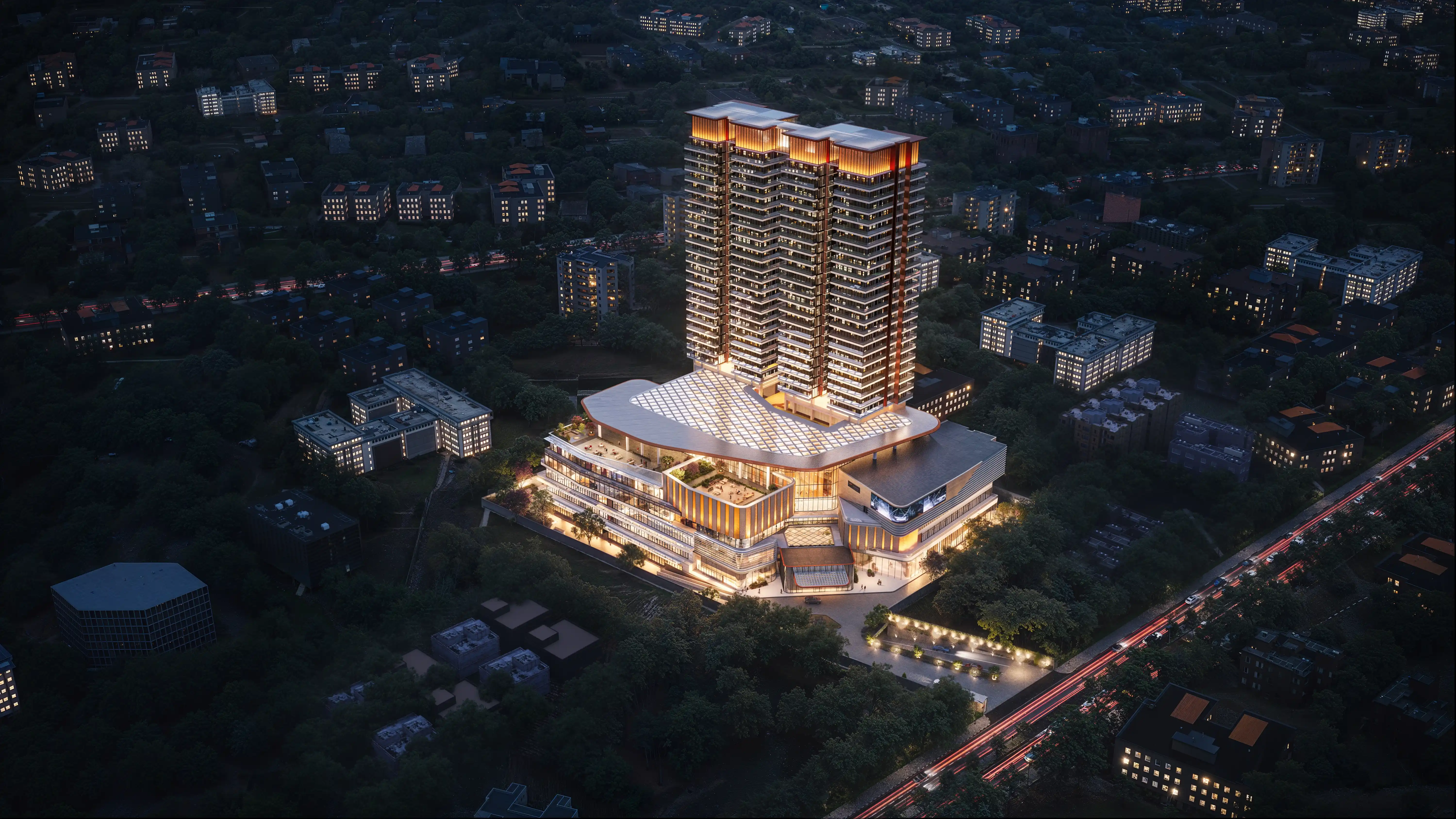
In Gurgaon, leading developers have created residential portfolios around large master-planned communities.
1. With the first fully integrated township, DLF was at the forefront of creating residential clusters with office and retail space together to develop a true integrated community.
2. M3M Crown is the best example of high-end living. It's a residential project developed in Sector 111, with residential apartments designed around extensive landscaping and amenities.
3. Emaar India has developed multiple gated communities in Gurgaon that adhere to international design standards and have integrated infrastructure.
Large-scale township developments will continue to expand over time. M3M most recently announced that they will invest ₹7,200 crores in Gurgaon International City (150 acres), which is another example of developers implementing large master-planned urban ecosystems.
Source: TheEconomicTimes
Emerging developers have begun to adopt similar principles as well. Developers such as SPJ Group focus on providing structured community layouts, landscaped environments and integrated amenities that adhere to urban master plan frameworks.
Urbanisation in NCR is expected to grow over the next 10 years. As population density increases and infrastructure projects expand, master-planned residential projects will likely dominate premium residential supply in the future.
Three trends that will shape the future of urban master plans:
1. Integrated townships are replacing standalone towers
2. Transit-oriented developments will be located along expressways and metro corridors
3. Lower-density planning will result in larger green landscapes
Buyers and investors will find lasting demand and value for residential projects that incorporate government urban master plans and smart township design principles.
1. The residential master planning determines how housing, infrastructure and amenities will be developed within a growing city.
2. More than 16,000 hectares of land have been designated for the creation of residential areas in the Gurgaon Master Plan 2031 to accommodate the predicted population of 42.5 lakh residents.
3. The development of planned density and sector-based neighbourhood design enhances urban livability.
4. Large developers (e.g., DLF, M3M, and Emaar) are utilising township planning to create integrated residential communities.
5. Future premium housing in NCR will continue to be predominantly constructed within large urban master plans.
1. What is master planning in residential real estate?
Master planning is a long-term blueprint that allocates land for housing, roads, utilities, green spaces, and public infrastructure to guide how a city or township develops.
2. Why is the Gurugram Master Plan important for homebuyers?
It outlines where the residential sector, commercial hubs and infrastructure corridors are going to be developed. This means that buyers will be able to find areas that will be stronger for future growth.
3. How can buyers verify if a project follows the master plan?
Home buyers can check with the government zoning authorities (DTCP) to see that all zoning approvals and land-use approvals have been granted. They should also look at the master plan for the project they are buying into to ensure the project layout corresponds to the approved master plan.
4. Why is RERA registration important when buying property?
RERA ensures developers disclose approvals, project timelines, and financial details, protecting buyers from delays or misleading information.
5. How does population density affect residential projects?
Density planning controls the number of residents per hectare to balance housing supply with infrastructure, open spaces, and livability.
6. Do master-planned residential communities offer better investment potential?
Projects within planned sectors often see stronger demand and value growth because infrastructure, amenities, and connectivity are developed systematically.
Disclaimer : The information available in this advertisement is subject to change without any notice. While every effort has been made to provide the details, particulars, contents and other graphics appearances in this advertisement as updated, correct, complete and accurate, nevertheless, inadvertent errors may occur in the information. Further, our website(s) and other advertising and publicity material include artist's impressions indicating the anticipated impressions of the appearance of completed development and do not constitute an offer, an invitation to offer and/or commitment of any nature between us and the recipient.
© Copyright 2026 SPJ, All Rights Reserved


